It probably won’t surprise you when we say that 2023 might prove challenging for most businesses.

With the economic crisis just around the corner, customers will look for ways to cut costs. In fact, will reduce their expenditures this year.
Luckily, customer churn can be avoided. Here are over 50 statistics on customer retention that will help you stay on top of your game.
Table of Contents
Customer Retention Statistics
- As many as fail to measure their retention rate.
- differ greatly among industries. Here’s how they break down:
- Insurance: 84%
- Banking: 75%
- Retail: 63%
- Hospitality: 55%
- Fintech: 37%
- SaaS: 35%
- Media: 25%
- Edtech: 4%
- In many industries, the top five players on the market have an according to Survey Sparrow.
- In terms of factors that impact customer retention, admit excellent customer service is critical.
- There is a to an existing customer.
- Meanwhile, when it comes to new customers, the chance of closing a sale stands at just .
- Brands use two main methods for customer retention — mobile apps and email marketing — used by , respectively.
- Price matters to customers — they look for a fair price when selecting a company to buy from.
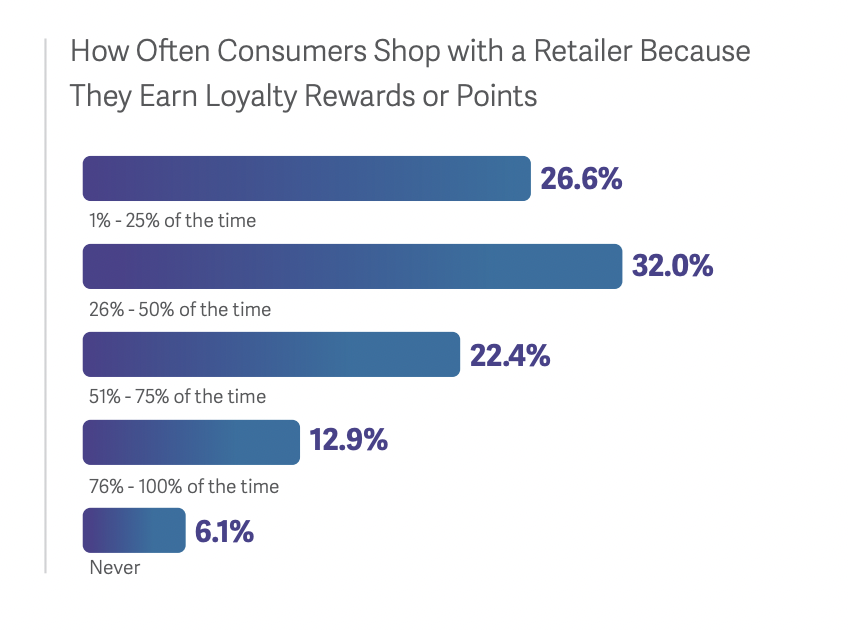
- In fact, admit that discounts and loyalty points make them stay with a brand for longer.
- According to Yieldify’s “Personalization After COVID-19” report, customer retention has now become the top goal for e-commerce websites, . It overtook conversion (55%) and acquisition (45%).
Loyalty Statistics
- When asked in a survey about what “customer loyalty” means, said it’s about feeling appreciated and understood rather than receiving special offers. 64% also mentioned that they are willing to spend more on a brand that remembers them and offers a personalized experience.
- The COVID-19 pandemic caused to change their shopping habits. 73% of US buyers who switched brands plan to stay with them.
- now create content not only to generate leads but also to strengthen bonds with clients and boost retention.
- Loyalty points are proving to be an effective strategy for businesses. A study by Visa and Bond found that shop more frequently and spend more to boost their point earnings.
- will recommend the brand to their friends and family, while 66% will write a positive online review after a good experience.
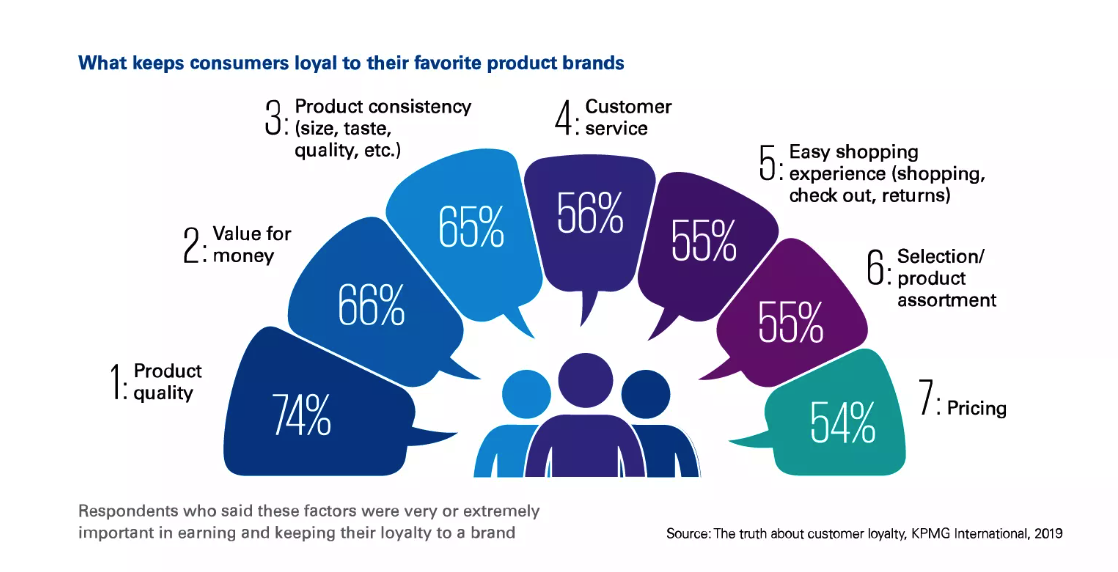
- mention product quality as the main factor that keeps them loyal to a brand, followed by value for money.
- If a customer trusts a brand, then as many as are likely to stay loyal.
- mention customer service as the primary factor behind loyalty.
- Being customer-centric, which includes personalization and friendly customer service, results in repeat purchases.
- According to a , 74% of respondents make purchases based on their buying experience, and 77% view CX to be as important as product quality.
- When asked if they’re loyal to brands or specific offerings, more than half of respondents in an said that it’s a combination of both.
- 26% replied that they feel attached to brands, compared to 21% who feel loyal towards products and services.
- In terms of age, Millennials were the group with the highest focus on branding (30%).
- say that friendly customer support, convenience, and speed are the three most important factors that contribute to their loyalty toward a business.
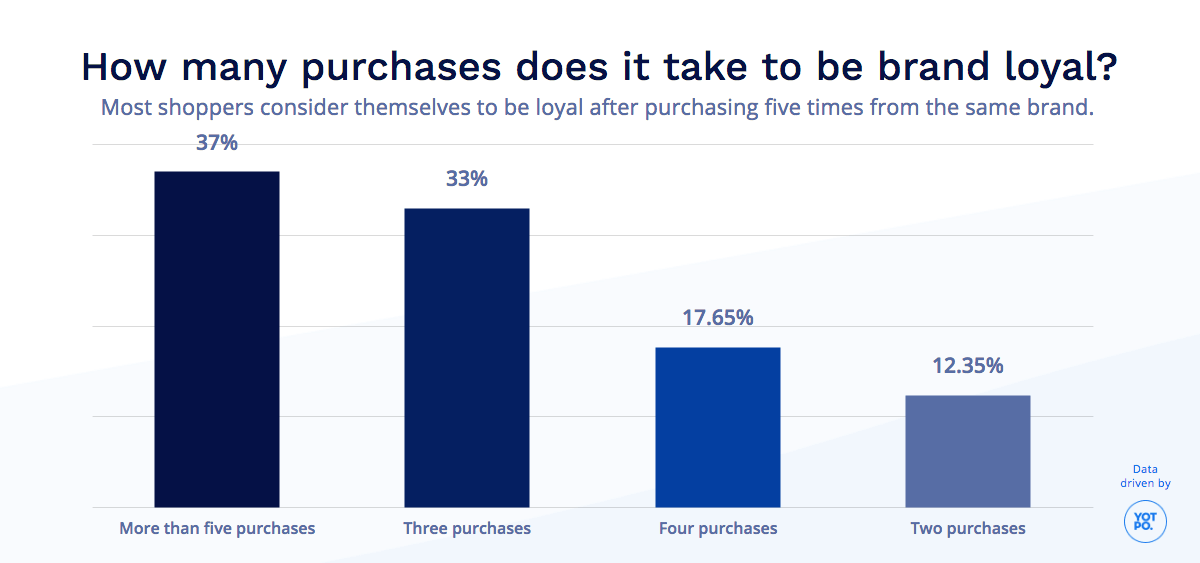
- For , it takes at least five purchases from the same company to deem themselves loyal to it.
- Only admit that they fell in love with their favorite brands “at first sight.” As many as 80% say that they tend to “grow to love” brands they purchase from over time.
- declare that once they’ve become loyal to a brand, they’ll likely do business with them for life.
- In fact, for a decade or longer. This number includes all generations. Still, perhaps most interestingly, this is also true for 60% of Millennials, who are a relatively young demographic.
- In the United States, admit that they belong to a loyalty program, compared to 59% of men. These programs are most popular among those aged between 55 and 64.
Churn Rate Statistics
- Social media impacts customer spending. Buyers spend between with companies that quickly resolve their requests on social media. Firms that ignore social experience a 15% higher churn rate than their responsive counterparts.
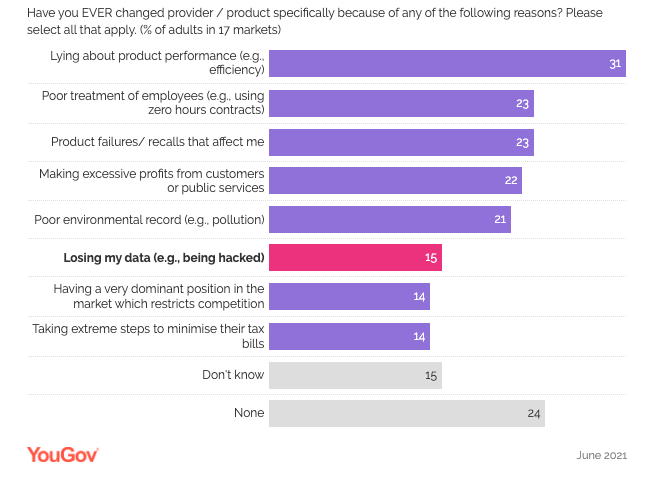
- The is lying about product performance, including its efficiency.
- On average, it costs a business to lose a customer.
- SaaS companies that focus on smaller businesses should expect a . Those that serve enterprises can expect a rate of just 1%.
- New SaaS companies can expect in their first twelve months on the market.
Customer Experience and Support Statistics
- believe that unhappy employees negatively affect the customer experience, according to a study on consumer perception by Cogito.
- 65% pointed to long response times, and 62% to employee frustration and low energy levels as the main culprits.
- admit that they won’t spend money on a business that doesn’t provide a personalized experience.
- have said that they are planning to increase their spending on customer experience initiatives in 2023.
- As many as who ranked the company’s CX as “very good” are likely to buy from them again in the future.
- On the contrary, would do repeat business with a brand that received a “very poor” rating.
- Companies fall short of providing good customer service. claim it feels like an afterthought.
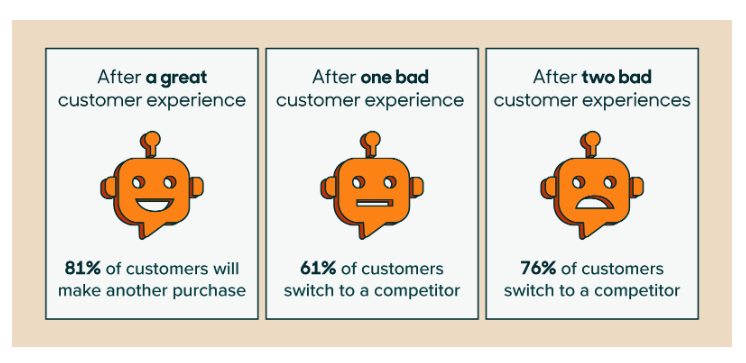
- Buyers can be unforgiving. While that they would make another purchase if they had a positive shopping experience, 61% would switch to a competitor after just one poor experience.
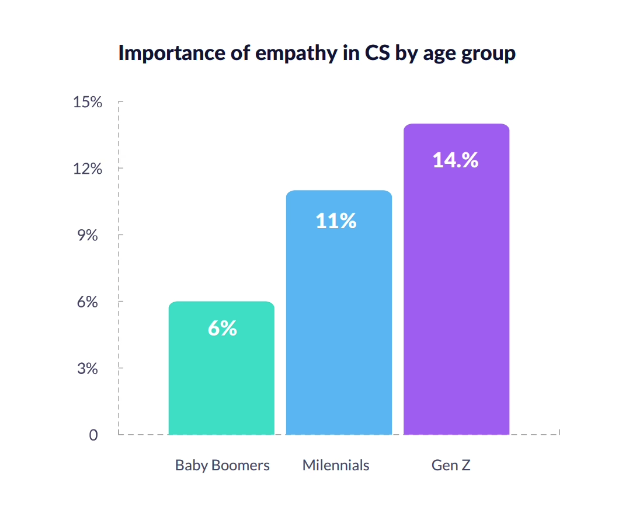
- Expectations towards customer support are growing. say they’d like the CS to be more responsive and empathetic. This seems to be especially important for Gen Z buyers.
- All industries failed to deliver on customer expectations — .
- Great customer service experiences increase the . An attentive, individualized approach also boosts the chances of word-of-mouth recommendations by 97%.
- Making it hard for your customers to return products will cost you .
- Sometimes all it takes is an apology. say that if a company they regularly bought from made a mistake, they would continue purchasing from them if they apologized.
- In a , 70% said they’d be willing to pay more in exchange for a convenient experience.
- This number increased to 90% when delivery was mentioned.
- Only 62% said they’d pay more for better customer service.
- According to the Customer Center Satisfaction Index (CCSI) Report, nearly say that they prefer to speak to customer support specialists over the phone than online.
- The same number, i.e., , said in a PwC survey that they always choose to speak to a human over a bot. This number will stay this way at least until AI technology has become more helpful.
- Currently, over (around 66%) of companies compete mainly on the basis of customer experience. In 2010, this number equaled 36%.
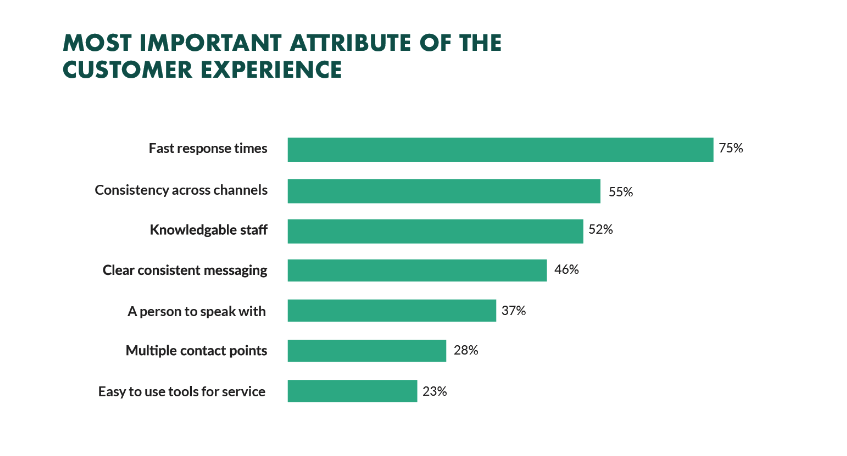
- When it comes to customer experience, say the speed of response is the most important to them. Followed by consistency across channels (55%).
- In a survey on customer service frustration, named lack of effectiveness as the number-one factor.
- who’ve had a pleasant customer support experience over social media say they’re likely to recommend the company to others.
- admit that they’ve turned to social media at least once to complain about a bad experience with a brand.
